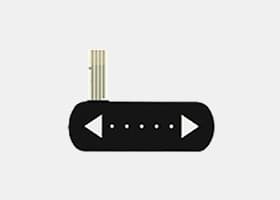
Linear position sensing
FSLP devices support smooth slider-style control in compact interfaces where tactile, low-profile input matters.
View FSLP sensor
Standard Products
Interlink position solutions extend core force-sensing capabilities into touch-driven position control for menu navigation and embedded interface design.
The Force Sensing Linear Potentiometer (FSLP) detects position along a straight path, making it useful for volume sliders, linear movement controls, and home automation interactions where users expect smooth, tactile navigation.
The Ring Sensor uses related force sensing principles in a 360-degree format, giving teams a dial-like interface pattern that can be integrated into compact industrial and consumer products without adding complex mechanics.
For early-stage design and prototyping, Interlink offers HDK options with sensor and connector variations. If standard shapes are not a fit, the custom solutions team can modify dimensions, geometry, and stack-up details for application-specific position sensing requirements.
Why teams use them
Common application fit
Interlink position sensing solutions support both direct product integration and early-stage evaluation. Start with standard platforms, then adapt geometry, stack-up, and interface behavior when your program needs something more application-specific.
FSLP devices support smooth slider-style control in compact interfaces where tactile, low-profile input matters.
View FSLP sensor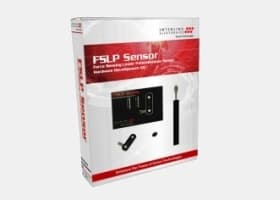
HDK options help teams validate feel, connector options, and integration behavior before locking geometry or electronics.
Explore HDK options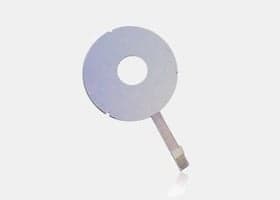
Ring Sensor solutions deliver 360-degree control patterns for dial-like interfaces without bulky mechanical assemblies.
View ring sensor
Reference hardware supports early proof-of-concept work for embedded controls, appliances, industrial HMIs, and medical devices.
View ring sensor HDKCustom support
If the standard linear or ring formats do not match your enclosure, force threshold, or connector requirements, Interlink can adapt materials, dimensions, and sensor layouts for a better fit. That includes support for concept validation, packaging constraints, and production readiness.